Why I Always Click Avoid Tolls
I was somewhere between Albania and North Macedonia when I realized I'd been doing this completely backwards.
I was somewhere between Albania and North Macedonia when I realized I’d been doing this completely backwards.
The toll road stretched ahead. Wide, straight, and forgettable. Four lanes of industrial efficiency cutting through landscape I couldn’t really see. Traffic moved fast. Everyone had somewhere to be. And I was sitting there thinking: this is exactly what I came to Europe not to experience.
Here’s the thing. I didn’t start avoiding toll roads because I had some philosophical position on slow travel. I started avoiding them because I had no idea how to pay for them.
Back in Texas, we have EZ Tag. You stick a little transponder on your windshield and drive through toll plazas. The system reads it, charges your account, and you never think about it. Simple.
Europe doesn’t work like that. At least not for an American driving a German-plated Porsche through a dozen different countries. Some places have booths where you pay cash. Some have electronic systems that only work if you’re a resident. Some have cameras that bill you later, except they have no idea where to send the bill because you’re not in their system. It’s a mess.
So I opened Google Maps, clicked into the route options, and turned on “avoid tolls.” Problem solved.
Except it wasn’t just a workaround. It completely changed how I experienced driving through Europe.
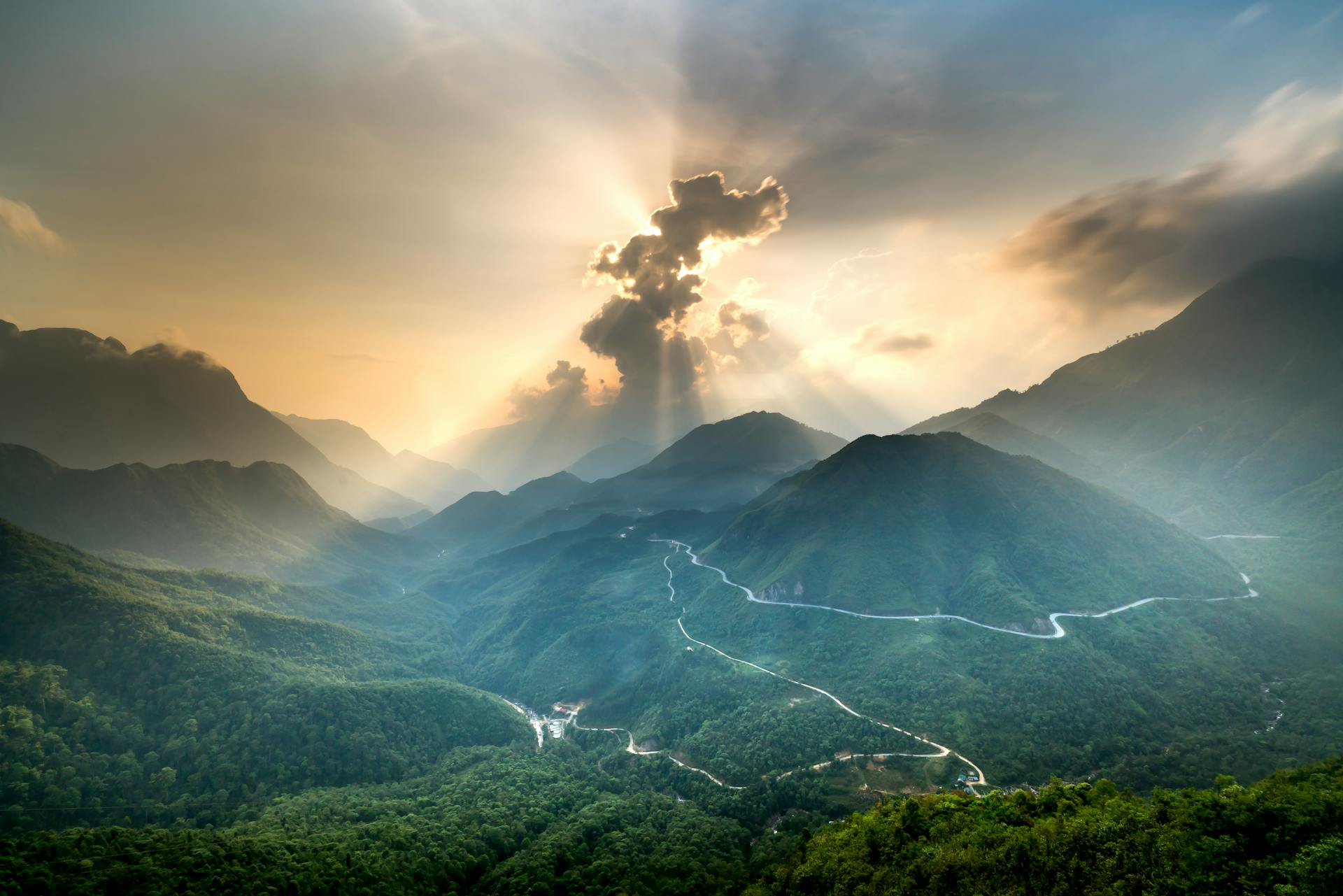
That Albania-to-Macedonia toll road? Fast, sure. But utterly generic. It could’ve been anywhere. The route Google sent me instead went through mountain towns I’d never heard of. Places where the road narrowed to two lanes and wound around hillsides. Places where I’d pull over just because the view was stunning and there was actually somewhere to pull over.
Toll Roads Are Designed to Be Forgettable
Toll roads are designed for one thing: moving you efficiently from Point A to Point B. They’re engineered to be fast and boring. Straight lines. Minimal exits. High traffic density. You’re surrounded by trucks and cars all doing 130 kilometers per hour, and nobody’s there to see anything. They’re there to get somewhere else.
The back roads are the opposite. They exist because that’s where the towns are, where the valleys run, where the mountain passes naturally occur. The speed limit drops to 60 or 70 kilometers per hour. Traffic thins out. And suddenly you’re not just driving through a country. You’re actually in it.
I started noticing patterns. Toll roads cut through landscapes. Back roads follow them. Toll roads have rest stops with chain restaurants. Back roads have towns with cafés where locals actually eat. Toll roads feel industrial. Back roads feel human.
This became my default setting. Every route I planned, I’d turn off tolls. Germany to Austria through small Bavarian towns instead of the autobahn. Italy’s mountain roads instead of the straight shots between cities. Croatia’s coastal routes instead of the highway that runs parallel but inland.
And yes, it takes longer. That’s the whole point.
The Extra Time Is the Experience
When you’re on a toll road doing 130, you’re in transit mode. You’re not present. You’re just waiting to arrive. On a back road doing 60 through a valley you didn’t know existed, you’re actually traveling. There’s a difference.
Some of my best driving days happened because I avoided tolls. The route from Switzerland to Italy that wound through Alpine villages where I stopped for lunch at a place with no English menu. The road through rural Poland that took me past wooden churches and farms that looked like they hadn’t changed in centuries. The Croatian coastal stretch where I pulled over six times just to take photos because the Adriatic kept appearing at different angles through the cliffs.
None of that happens on a toll road.
Here’s what I tell people now: if you’re driving across Europe and you’re not on a deadline, turn off tolls in your navigation. You’ll add time to your trip, but you’ll subtract nothing. The extra hour or two you spend on the road becomes the actual experience instead of dead time between destinations.
The Right Car Makes It Better
The Taycan handles it perfectly, which helps. Electric cars are actually ideal for this kind of driving. The instant torque makes constant speed changes on mountain roads effortless, and the regenerative braking means you’re rarely touching the brake pedal on descents. The range anxiety people worry about? Not really an issue on back roads where you’re going slower and there’s usually a charger in whatever town you’re passing through.
But this works in any car. I did the same thing in a Range Rover Sport I rented near Brisbane. Took the long way through the Australian hinterland instead of the highway. Same principle. The roads that connect small places are more interesting than the roads that bypass them.
There’s something else, too. When you take back roads, you end up in situations where you have to figure things out. You stop in a town for gas and realize nobody speaks English, so you pull out Google Translate. You find a restaurant that’s not on any tourist map. You ask locals for directions and they point you toward a scenic route you never would’ve found otherwise.
Those moments don’t happen at rest stops on toll roads.
When Tolls Make Sense (and When They Don’t)
I’m not saying toll roads are pointless. If you need to get from Munich to Vienna in four hours for a meeting, take the toll road. If you’re moving between cities and the drive itself isn’t the point, fine. But if you’re traveling, if the journey is part of why you’re there, skipping the tolls might be the best decision you make.
That Albania-to-Macedonia drive stays with me. Not the toll road part. I barely remember that. But the route I took the next time, through mountain villages and past lakes I didn’t know existed? That’s what I think about when someone asks me about driving through the Balkans.
It’s the same reason I started Seren Mont. The best parts of traveling by car aren’t about getting somewhere fast. They’re about what you see when you slow down enough to actually look around. And the thing is, those back-road discoveries don’t happen by accident. They happen because someone planned a route that put you on them in the first place. The toll roads will always be there if you need them. But the back roads are where the actual Europe is.
So next time you’re planning a route, try it. Click “avoid tolls” and see where it takes you. I’m pretty sure you’ll end up somewhere better than where you were headed.
Written by
Tarik Bob
Founder, Seren Mont