The Difference Between a Trip and a Journey
I was somewhere between Innsbruck and the Italian border when I realized I hadn't checked my phone in hours. Not because I was trying to disconnect, I just forgot.
The Difference Between a Trip and a Journey
I was somewhere between Innsbruck and the Italian border when I realized I hadn’t checked my phone in hours. Not because I was trying to disconnect, I just forgot it existed. The road had my full attention. The way the Taycan handled the switchbacks. The light changing as we dropped in elevation. The silence between tunnels giving way to these massive valley views.
That’s when it hit me: this wasn’t a trip. It was a journey.
I know that sounds like the kind of thing someone posts on Instagram with a sunset photo, but there’s a real difference. I’ve done plenty of trips — the kind where you fly somewhere, hit the highlights, take the photos, fly home. They’re fine. Some of them are great, actually. But they fade fast. A year later, you remember you went to that place, but the details blur together.
A journey is different. A journey stays with you.
The first time I understood this, really understood it — I was watching a video of someone driving a Porsche through the Dolomites. I was maybe twelve, sitting in my room in Texas, and I remember thinking: that’s not about getting from point A to point B. That’s about the road itself. The act of driving. The way the car moves through the landscape. I didn’t have the language for it then, but what I was watching wasn’t a trip. It was a journey.
Fast forward twenty years, and I’m living that video — sometimes literally on those same roads. And the thing I’ve learned is that the difference between a trip and a journey isn’t about the destination. It’s not even really about the route, though the route matters a lot. It’s about whether every part of the experience has been considered — not just where you’re going, but how you get there, what you’re driving, what’s waiting for you when you arrive, and what you notice along the way.
The Road Is Part of the Experience
Here’s what most travel gets wrong: it treats the space between destinations as dead time. Something to endure. You fly somewhere, you take a transfer, you get to the hotel, and that’s when the experience starts. Everything before that was logistics.
A journey flips that entirely. On a journey, the drive from Munich to Venice isn’t the gap between two cities — it’s the experience itself. The alpine passes, the way the landscape shifts as you cross from Austria into Italy, the sound of the car in a tunnel carved through a mountain. That’s not filler. That’s the thing.
When I’m building routes for Seren Mont, that’s what I’m thinking about. Not just the destinations — those matter, obviously, but the roads that connect them. Because the right road turns a transfer into a memory. The wrong road turns a beautiful trip into six hours of highway you’ll never think about again.
There’s a route I love through Croatia that starts in Dubrovnik, works up the coast, cuts inland through the mountains. On paper, you could connect those dots a dozen different ways. But there’s one specific combination of roads that makes it something else entirely. The way the coastal road opens up after Makarska. The mountain pass that drops you into a valley you didn’t know was there. The timing of it, so you’re hitting the best stretch of road right when the light is perfect.
None of that happens by accident. It happens because someone drove those roads, noted the details, and built the route around them. That’s the difference between going somewhere and journeying somewhere.
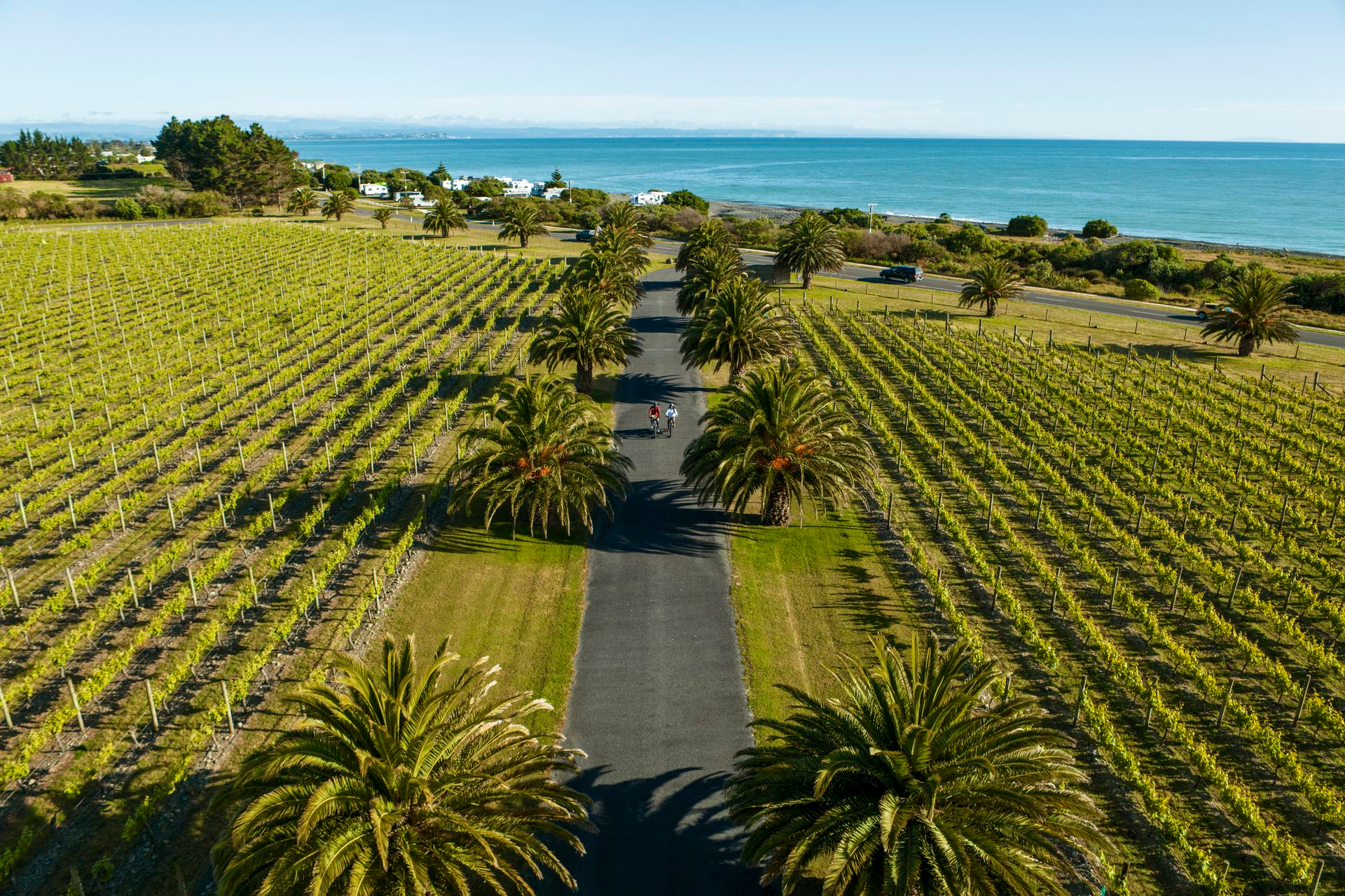 The right road doesn’t just get you there — it becomes part of the story
Photo: Graeme Murray / Tourism New Zealand
Pacing Changes Everything
Most trips try to pack in as much as possible. You’ve got three days in Rome, so you hit the Colosseum, the Vatican, Trevi Fountain — all the boxes. You take the photos. You eat the pasta. It’s good. But you’re also kind of exhausted, and by day two you’re already thinking about where you’re going next.
A journey has a different vibe. You might spend three days driving from Munich to Venice, not because you’re lost or making it up as you go, but because the route was designed to give you time. Time to pull over at that viewpoint. Time to spend an extra hour at lunch in some town you’d never have found on your own. Time to take the coastal road instead of the highway because someone knew it was worth it.
Good pacing isn’t the absence of a plan. It’s the result of a really good one. When I’m planning routes for Seren Mont, pacing is the first thing I think about. Not how much you can see, but how much you can actually experience. Because there’s a version of that Croatia route that takes two days and leaves you tired, and there’s a version that takes five and leaves you different. The destinations are the same. The pacing is what separates them.
That’s when travel stops feeling like a checklist and starts feeling like living.
The Car You Choose Matters More Than You Think
When I rented a Range Rover Sport in Australia, it was perfect for what we were doing — long highway stretches, some rough coastal roads near Brisbane, enough space for all our gear. Comfortable, high up, smooth. It made that trip easy. But easy isn’t always what you want.
The Taycan is different. It’s fast, genuinely fast in a way that makes mountain roads feel like a conversation between you and the car. The steering is so direct that you feel connected to the pavement. When you come out of a tunnel in the Swiss Alps and the whole valley opens up in front of you, the car doesn’t just transport you through that moment. It amplifies it.
That’s the difference between a trip car and a journey car. A trip car gets you from the airport to the hotel to the restaurant and back. A journey car makes you want to take the long way. It makes you want to drive.
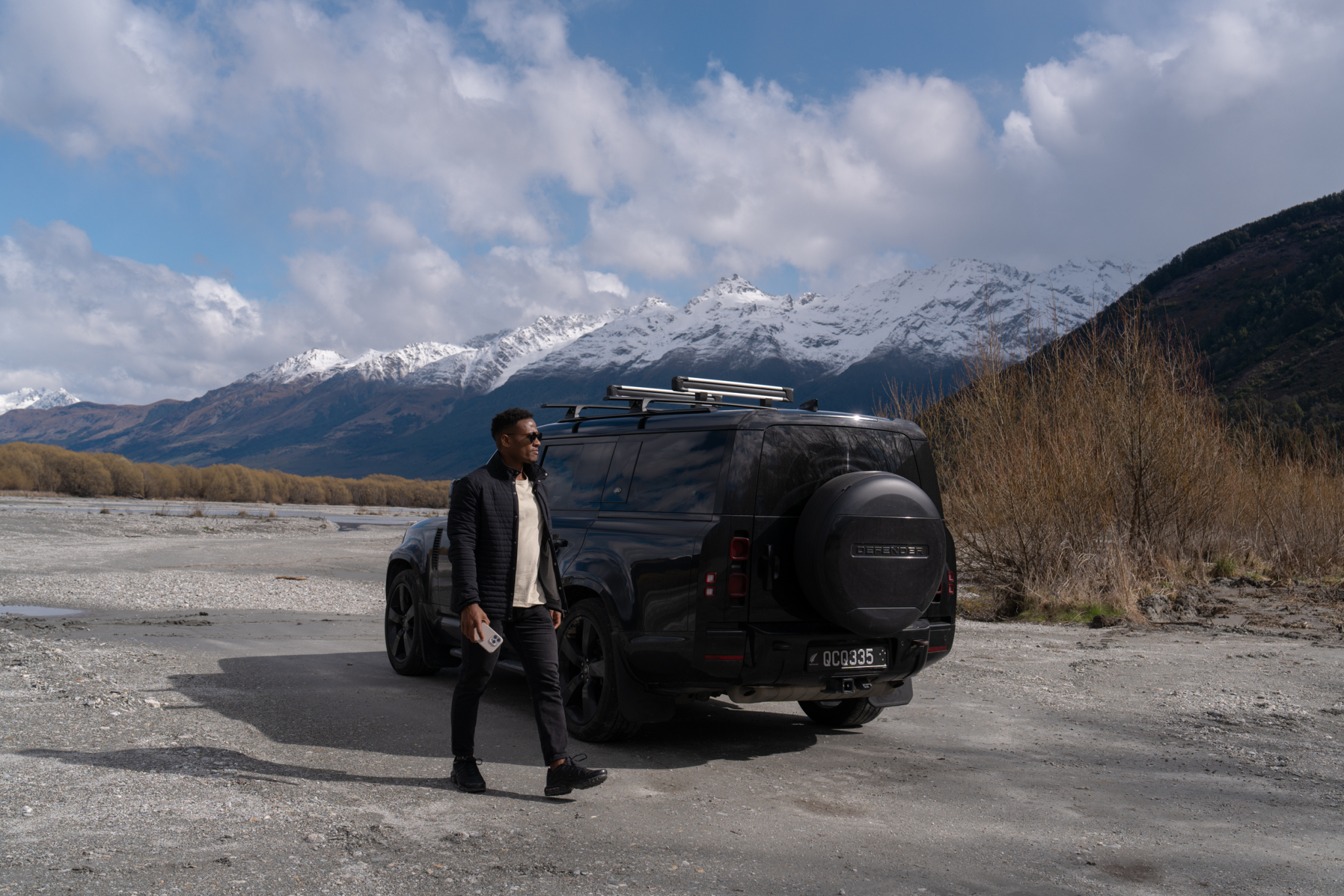
In New Zealand, we rented the long-wheelbase Defender, and that was its own kind of journey vehicle. Slower than the Taycan, way less refined, but something about the way it felt — rugged, capable, like it belonged in those landscapes — made every drive feel like an adventure. Matching the car to the route, the terrain, the experience you’re after — that’s something most people don’t think about until they’re already behind the wheel wishing they’d chosen differently.
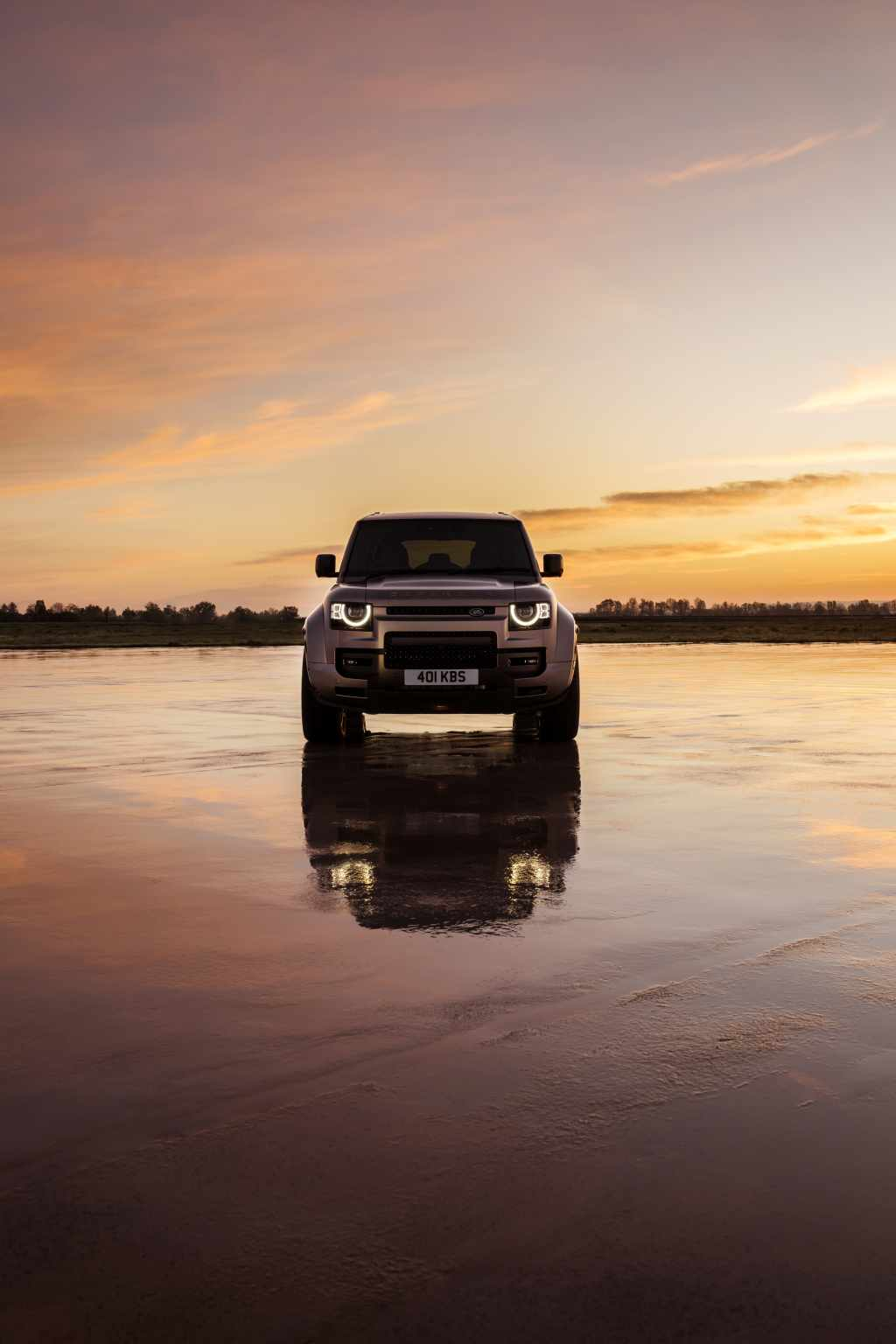 The moments that stay with you are the ones you were fully present for
Every Detail Is Part of the Journey
Here’s what I think it really comes down to: a trip is about the destinations. A journey is about the whole thing.
The road you take. The car you’re driving. The place you stop for lunch. The hotel you pull into at the end of the day. The view from your room. The restaurant someone recommended that you’d never have found on your own. All of it. Every part of the experience either adds to the journey or takes away from it. There’s no neutral.
I remember driving through Montenegro — this was before I started Seren Mont, just scouting roads for myself. I came around a bend and hit this mountain pass I’d never heard of. It wasn’t on any of the lists. It wasn’t in the guidebooks. But it ended up being one of the best drives I’ve ever done. Empty road, insane views, just me and the car and the mountains.
That’s the kind of thing that turns a trip into a journey — but here’s what people miss: I found that road because I was out there specifically looking for it. Not that exact road, but roads like it. I was spending weeks driving routes, testing them, figuring out which combinations of roads and stops and timing actually work. The spontaneity of finding that pass only happened because of the deliberate work of being there in the first place.
That’s what I mean when I say every detail matters. The best travel experiences feel effortless, but they’re not. They feel effortless because someone thought about all of it — the route, the car, the stops, the pacing, the timing — so that you can just be present and enjoy the drive.
What You Remember
The trips I’ve taken — even the good ones — mostly blend together now. I remember I went to those places. I’m glad I saw them. But the details have faded.
The journeys are different. I can still tell you exactly what it felt like to drive through Albania at sunset with the windows down. I can tell you about the restaurant in the Czech countryside where we were the only customers and the owner brought out food we didn’t order because he wanted us to try it. I can tell you about the moment we crested a hill in Austria and suddenly we could see three countries at once.
Those aren’t memories of places. They’re memories of moments. And they stick because everything around them — the road, the car, the pacing of the day — was just right.
I think that’s the real difference. A trip is something you do. A journey is something you live. And when you live it — when every part of the experience has been thought through so you can actually be present for it — it becomes part of you in a way that a trip never can.
I still have that image in my head from when I was a young kid of the Porsche winding through the Dolomites. But now I know what that driver was feeling. The focus. The presence. The sense that this moment, right here, is enough.
That’s a journey. And once you’ve felt it, it’s hard to settle for anything less.